






Upcoming Shows

Upcoming Events
During a time of historical fragmentation, we gather fragments of cardboard to rebuild memory – lest it be forgotten or erased.
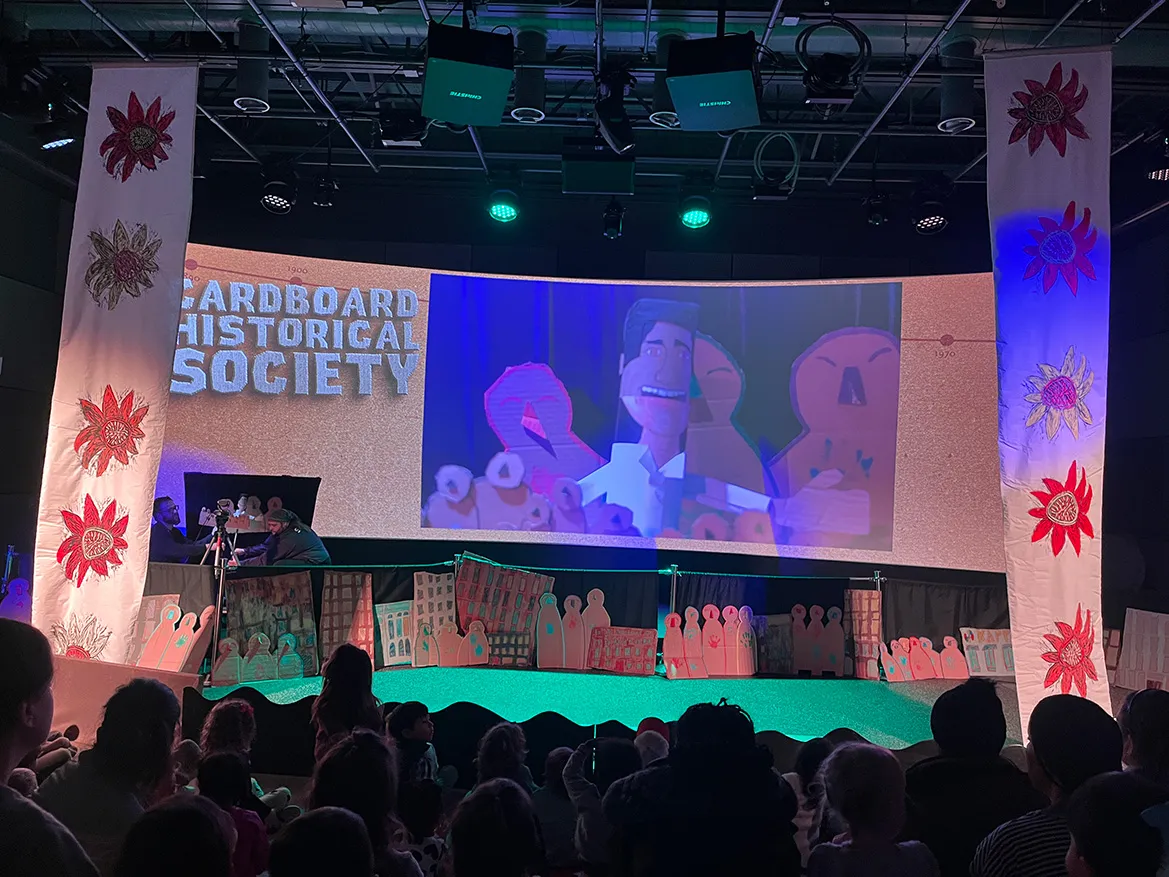
Cardboard Historical Society is an ever-shifting performance assembled from fabric scraps, corrugated cardboard, and broken sticks. Pieced together with hot glue, wire, tape, and magic marker, these humble materials transform into living portraits of figures such as Maya Angelou, Jesse Owens, Aretha Franklin, and many others – artists, singers, scientists, activists, Olympians, and visionaries whose contributions continue to shape our collective story.
The materials are deliberately simple. The work is not about theatrical polish or technical virtuosity. It is about illumination – shining a light on lives and legacies that deserve to be remembered, uplifted, and shared.
The fragility of cardboard mirrors the fragility of historical memory itself. From discarded pieces, we construct presence. From scraps, we assemble story.
Amplifying Small Histories
Most of the puppets are intentionally small – intimate in scale, handcrafted, and immediate. Yet our audiences often number in the hundreds. To bridge this gap, we amplify the puppets through a live video feed projected in real time onto the theater screen.
Suddenly, a five-inch tall Jean-Michel Basquiat becomes larger than life, painting a dinosaur on a cardboard canvas. What was once miniature becomes monumental.
This technological choice is not simply practical – it builds a visual language of witnessing into the performance. The camera becomes part of the storytelling, reinforcing the act of documentation itself. Many of these historical figures lived before the lens, their lives captured, recorded, and shared because their stories were worth preserving. Through the performance, we echo that responsibility: to document, to remember, and to carry history forward.
Embodiment Beyond the Lens
One figure, however, does not appear through the camera.
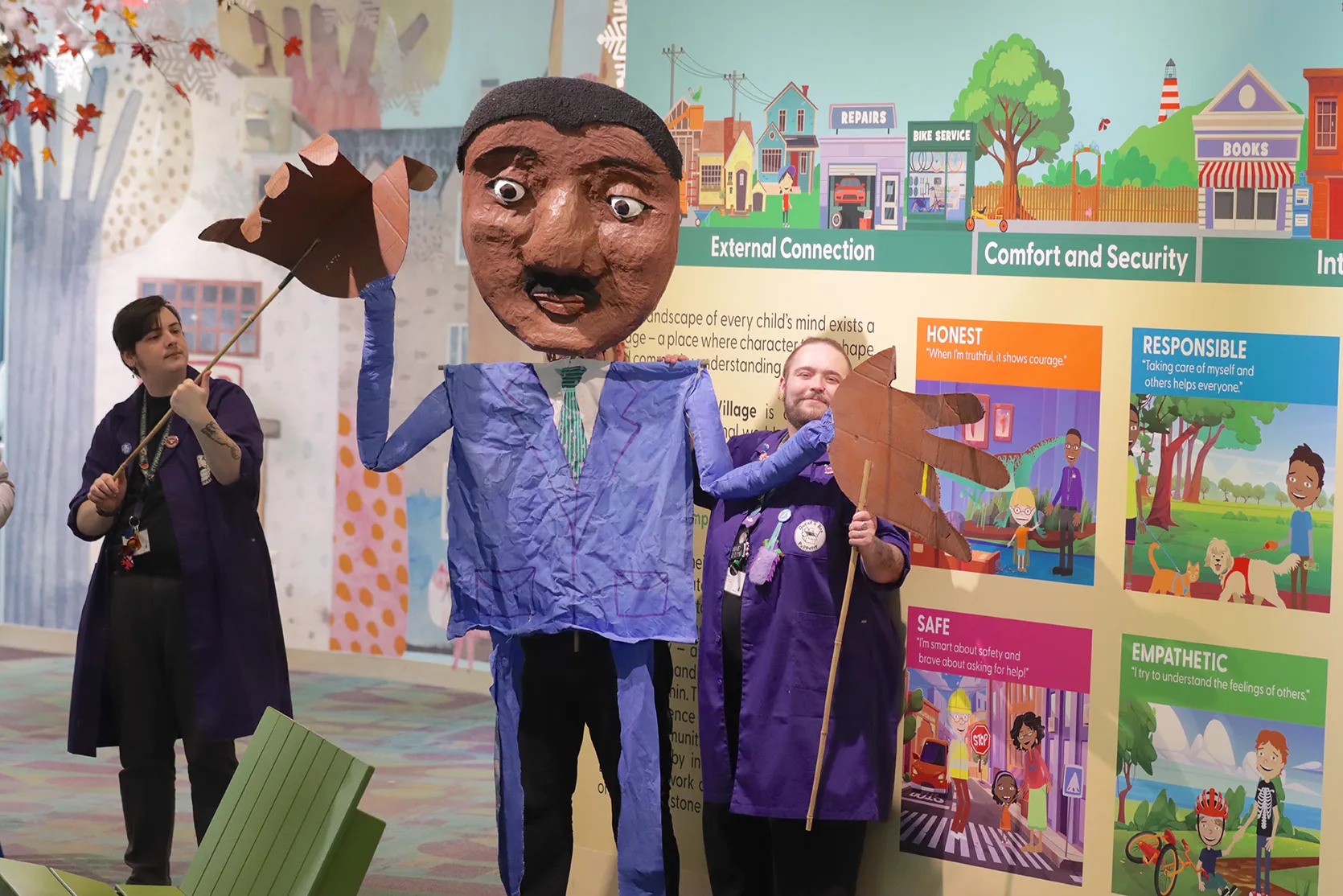
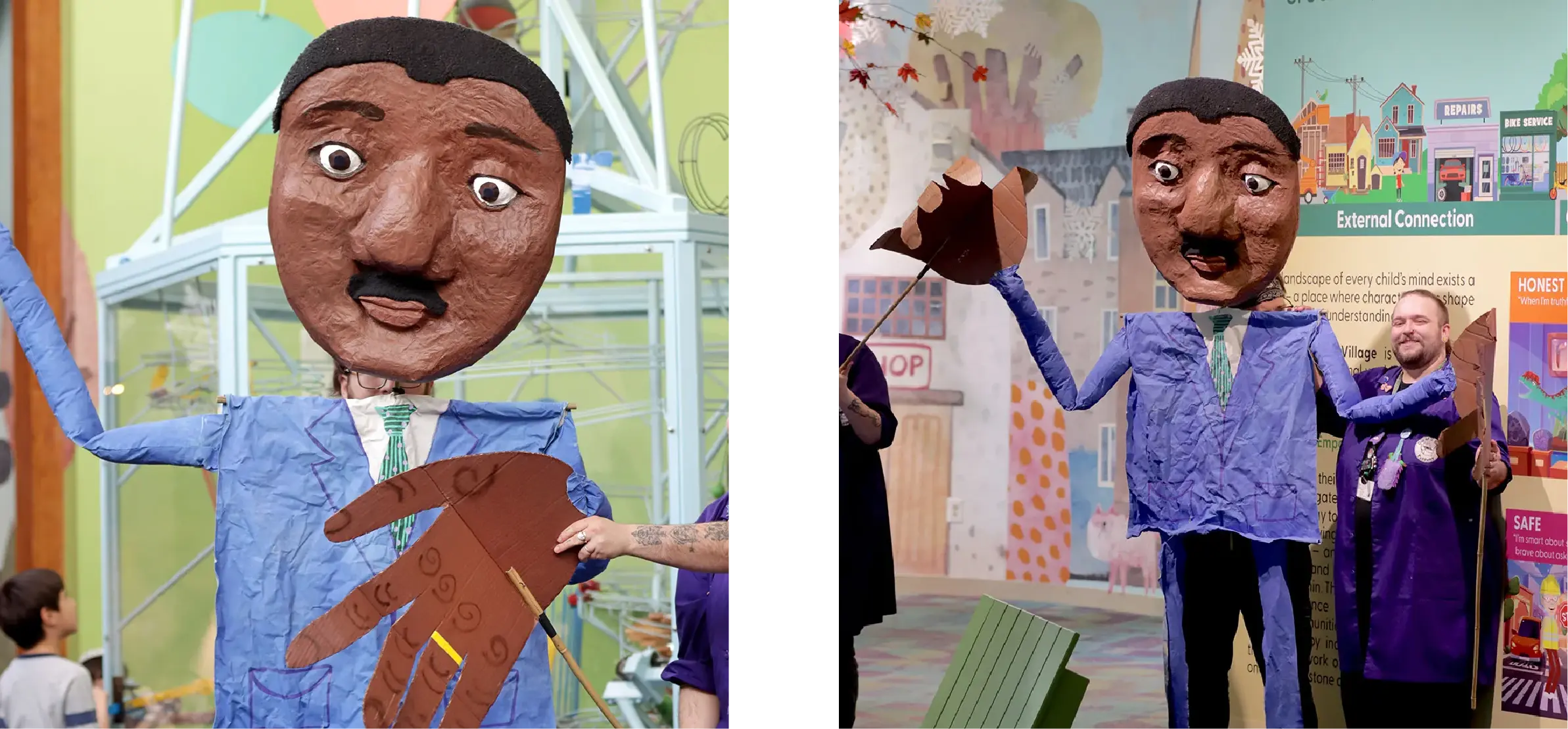
Our larger-than-life puppet of Martin Luther King Jr. emerges from backstage as Sam Cooke’s A Change Is Gonna Come fills the space. Operated by multiple puppeteers, Dr. King moves slowly across the stage through a landscape of cardboard buildings.
As the music fades, he takes center stage in the spotlight. A recorded excerpt from his I Have a Dream speech resounds as the puppet comes fully to life.
Unlike the others, Dr. King is not presented through projection. His presence is embodied directly in the shared space between performer and audience. His vision – a sweeping dream of an enlightened society – reaches beyond what can be contained within a frame or captured by a camera. The puppet becomes a bridge between historical memory and the living moment.
A Living Archive
From behind the Dr. King puppet, one of the most powerful experiences is looking out at the audience – faces of many ages and shades, gathered together, smiling up at a dream of a brighter tomorrow.
In these moments, cardboard becomes more than material. It becomes a reminder that history is not fixed – it is assembled, shared, and carried forward by those willing to hold it with care.
Through fragments, we remember. Through play, we preserve. Through puppetry, we keep history alive.
Author’s Note:
Cardboard Historical Society is an original Out of a Box Puppetry production, directed by TJ Jacobs and most performed during the February Puppet Weekend.
Puppet Weekend’s are the 2nd weekend of the month at Stepping Stones, featuring a different multimedia puppet production each month.
