






Upcoming Shows

Upcoming Events
What does it look like when a child is fully present?
Maybe it is the way they watch a piece of fabric ripple like water. Maybe it is how they reach out to touch a puppet, or take a deep breath without being asked. These small moments of attention and curiosity are at the heart of what we call mindfulness.
Mindfulness is the ability to notice what is happening right now, inside our bodies and around us, with a sense of openness and curiosity. It is not about being perfectly calm or still. It is about paying attention.
For adults, this can sometimes feel difficult. Our minds are often busy, thinking about what just happened or what is coming next. But for children, this kind of awareness comes more naturally. They learn through their senses by touching, listening, watching, and moving through the world.
At Stepping Stones Museum for Children, we build on that natural ability by creating experiences that invite both children and caregivers to slow down and explore the present moment together.
Mindfulness Through the Senses
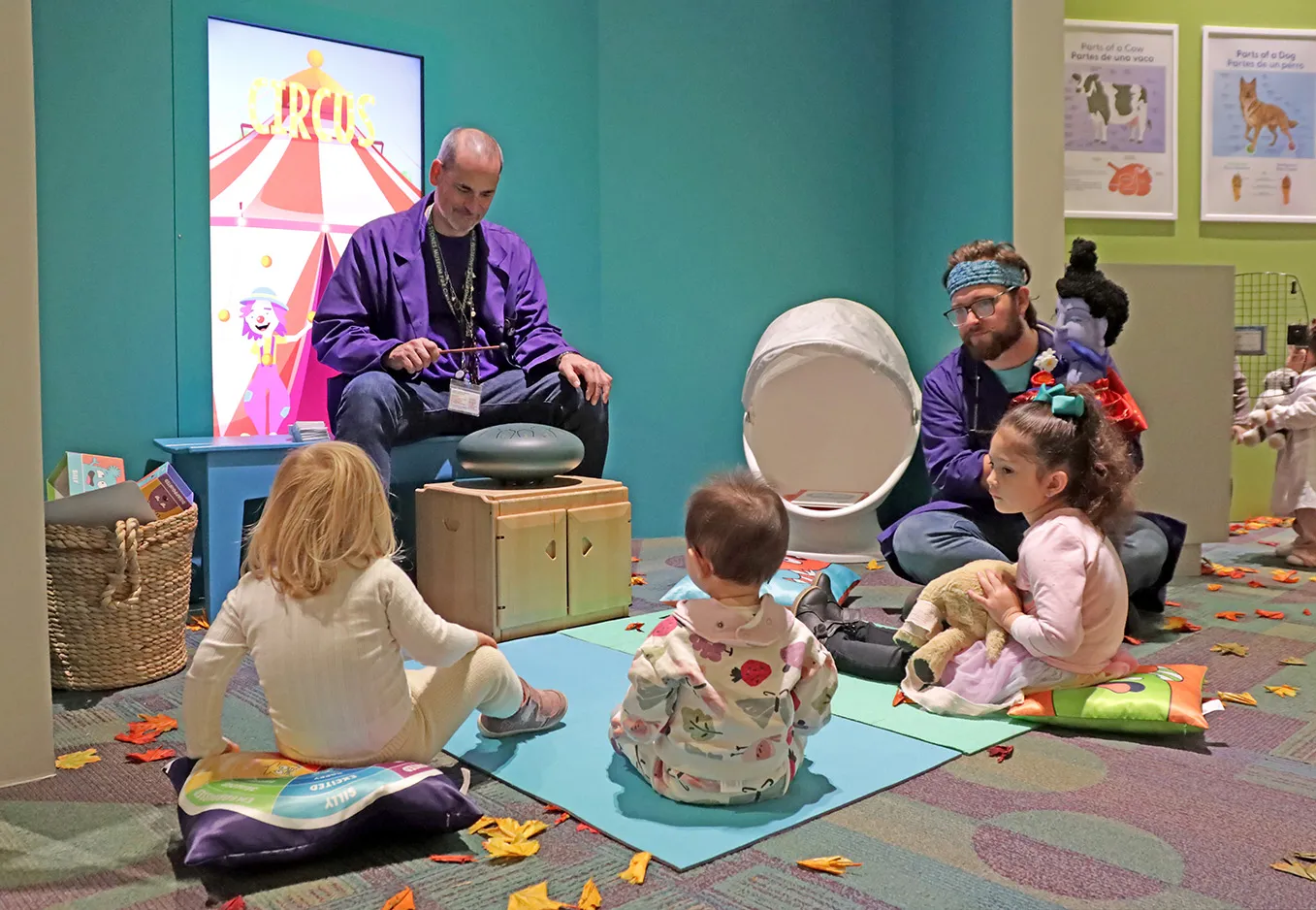
Rather than explaining mindfulness as a concept, we approach it as an experience. In our programs, we might begin with a simple body check in. Children wiggle their fingers, tap their arms and legs, and notice how different parts of the body feel.
This helps children develop body awareness, an important foundation for self regulation and emotional understanding. From there, we often explore the senses. Children might listen to the sound of a bell or singing bowl, watch light move across objects, or feel different textures like fabric or puppets.
These activities support sensory integration and help children focus their attention in a gentle, accessible way. We also incorporate breathing exercises such as ocean breath, where children take a deep inhale and exhale with a soft wave sound. Breathing together can create a shared sense of calm between children and caregivers.
Why Puppets?
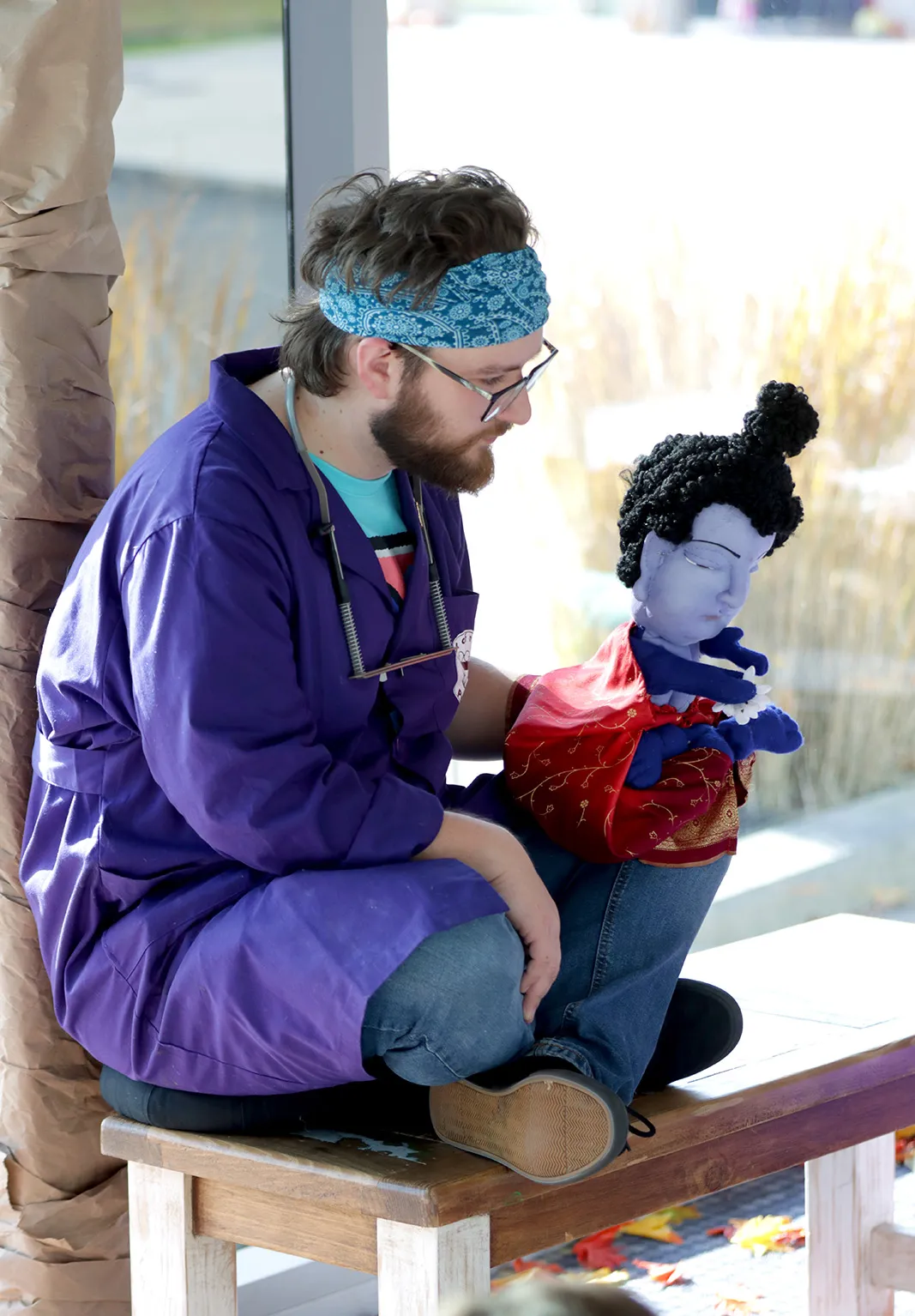
Puppetry is a powerful tool for mindfulness because it brings ideas to life in a way that is immediate, visual, and emotional. A puppet can model slow, steady breathing, show what different emotions feel like in the body, and invite children into moments of quiet attention and wonder.
For example, a puppet fish might swim through the air as blue fabric moves like water, encouraging children to breathe slowly like waves. A Snow Lion puppet might visit each child and practice a magic breath together, turning a simple action into something imaginative and memorable.
When we share stories, puppets help embody those lessons. In stories inspired by the teachings of Sharon Salzberg, a character might learn how kindness changes how their body feels, moving from tight and tense to soft and relaxed. With a puppet, children can see and feel that transformation in real time.
Creating Space for Calm and Connection
One of the most meaningful aspects of this work is not just what children learn, but what they experience alongside their caregivers. When adults slow down, take a breath, and engage in these activities, children notice. These shared moments help build emotional connection, trust, and a sense of safety and calm.
In some of our programs, we introduce a special puppet at the end, one that moves slowly and gently and encourages the room to settle. Without being instructed, children often begin to mirror the puppet. They breathe more deeply, move more slowly, and sometimes even bow or wave quietly.
These moments are not about teaching children to be mindful in a formal way. They are about creating an environment where mindfulness can naturally arise.
Try It at Home
You can explore mindfulness with your child in simple, playful ways:
- Take three ocean breaths together. Inhale deeply, the exhale slowly with a soft wave sound.
- Do a quick body check in. Wiggle fingers, tap arms, and notice how your body feels.
- Use a toy or puppet. Let it model slow breathing or gentle movement.
- Pause and notice. Ask what do you hear, what do you feel, and what do you see.
These small practices can help children build awareness, manage big feelings, and connect more deeply with the world around them.
A Final Thought
Mindfulness is not something we need to add to children. It is something they already have.
At Stepping Stones, our goal is to create experiences that help bring that natural awareness forward, using play, storytelling, and puppetry as our tools. In doing so, we support children and caregivers in finding moments of calm, connection, and presence together.
